
Lack of supply and rising land prices in Jakarta are making it harder to invest in property.
Jakarta is Indonesia’s fastest paced city. Home to the world’s fourth largest population, Indonesia has a considerably young demographic. Urbanisation is growing fast. 54 percent of the population live in cities and 74 percent of the economy is driven by cities. As a result there is a real pressure put on housing. This has been highlighted in a recent report, Housing the Millennials by Savills.
The real estate firm state that a lack of land and high property prices are exacerbating the situation. Many residents are unable to afford to buy in the centre of Jakarta, meaning that there only option is to head to the suburbs and face the gruelling traffic to commute to work. The facts presented by the Ministry of Public Works and Housing (Kemenpupera) are quite alarming. They state that only one-fifth of the population are able to invest in residential property. Half of the remainder can do so but with financial help with the other remaining half having no means to buy residential property at all. It is therefore unsurprising that there is a desperate need for affordable housing.
Considering these stark figures it is no wonder that many millennials will struggle to get onto the property ladder. Many of whom are flocking to Jakarta for employment opportunities as a result of good economic growth. The capital’s population is expanding and putting pressure on resources. Simultaneously the cost of living is also rising making housing even more expensive. Jakarta’s boundaries are therefore growing as residents seek a home outside of the centre.
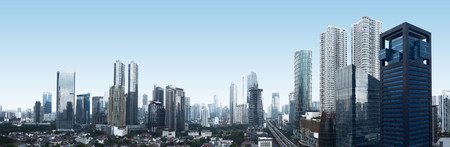
Developers saw these commuting challenges as an opportunity. They rapidly changed the skyline of the city centre with the emergence of vertical living to allow people to live centrally. However, despite the vast supply coming to the market, not enough was being built to meet with demand and affordability. In 2015 there was an estimated 1.3 million unit housing backlog. Many developers veered away from low-cost housing due to low profits thanks to high land prices. These new condominiums were out of reach for many particularly millennials whose monthly salary could not allow for mortgage lending.
We will go on to explore how Indonesia can tackle this housing shortage in our next blog. So stay tuned here at Dot Property.