

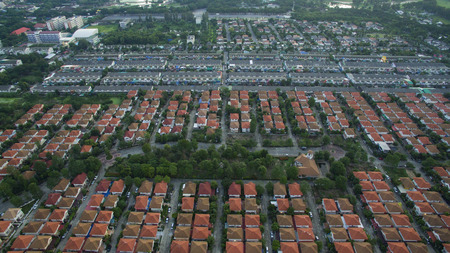
Thailand supplies houses for all budgets, but how have they achieved this?
The next in our series of how to address the affordable housing shortfall looks at Thailand as an example. In Savills’ recent report, Housing the Millennials by Savills, Thailand was cited as a good example of how they have built home for all of society regardless of their income bracket.
According to Thailand’s 2010 population and housing census, approximately 81 percent of the population are homeowners. Interestingly a similar story is occurring in Singapore despite Thailand not having nearly as much wealth as the tiny island-state. But in both countries the government have been active in ensuring that there is sufficient affordable housing. In Thailand this has been achieved thanks to the National Housing Authority and Community Organizations Development Institute who are the major players in aiding this supply.
Two methods
Each agency operates differently. The National Housing Authority builds low cost housing geared specifically towards lower income families. Whereas the Community Organizations Development Institute works alongside demand to rehouse families living in slums through community schemes to rebuild houses. The government plays their part by subsidising infrastructure and offers loans to improve on housing.
This active approach by Thailand has been ongoing since the 1970s. Low cost housing was provided to clear slum areas. Over the subsequent 30 years public housing was built and between 2002 and 2010 there was a supply of one million units using precast construction. Despite Thailand not copying Singapore’s high rise buildings, there has still been enough supply presumably due to the larger pool of available land available in Thailand. Low rise buildings were built usually of up to five-storeys. To date it is estimated that the National Housing Authority has built in excess of 700,000 units, of which 70 percent are situated in Bangkok Metropolitan Region meeting a quarter of the city’s population housing needs.
One reoccurring issue that Jakarta has is that land is being squeezed. Consequently land prices have increased hindering the construction of low cost housing. Therefore it is unlikely that Indonesia can copy Thailand’s model of low rise buildings in Jakarta where vertical living is likely to be the only option. However they could certainly look to entertain lower buildings in other areas of the country particularly as they cost less to construct too.